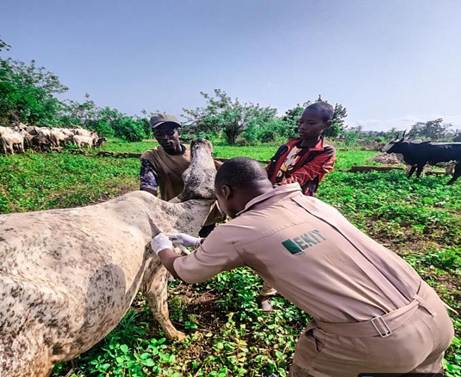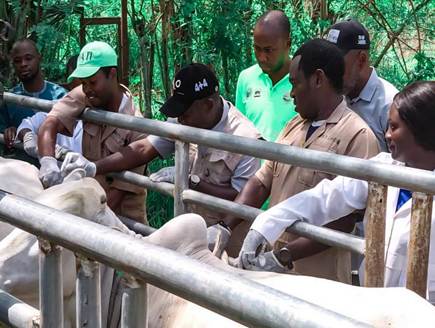
The Ekiti State Government through the Livestock Productivity and Resilience Support (L-PRES) Project has officially flagged off a statewide mass vaccination campaign aimed at driving down livestock mortality to near-zero levels while enhancing animal health and sector wide productivity.
The flag-off ceremony held in Ado Ekiti, provided a strategic platform to reinforce the government commitment to mitigating the impact of transboundary animal diseases.
Speaking at the event, the Commissioner for Agriculture and Food Security, Mr. Ebenezer Boluwade underscored the administration proactive approach to safeguarding livestock assets and strengthening the resilience of the sector.
He noted that the vaccination exercise represents a core intervention under the L-PRES framework, designed to prevent recurrent disease outbreaks that historically erode farmer incomr and disrupt value chain stability.
According to him, maintaining a healthy livestock population is fundamental to achieving food security, improving rural livelihoods and sustaining agricultural growth.
Boluwade further disclosed that the campaign targets high-impact diseases, including Contagious Bovine Pleuropneumonia (CBPP), Newcastle disease and Foot and Mouth disease – key threats that have consistently constrained livestock productivity.
In his remarks, the State Project Coordinator of L-PRES, Mr. Olayinka Adedipe emphasized the operational significance of the initiative in minimizing mortality rates and improving herd performance metrics.
He revealed that thousands of vaccine doses have been procured through the Federal Ministry of Livestock Development to ensure comprehensive coverage across all local government areas.
Adedipe called on livestock farmers to actively collaborate with field teams, stressing that preventive healthcare remains the most cost-effective and scalable strategy for disease control and sector sustainability.
Also contributing, veterinary inoculator, Dr. Ayo Ogunrinde highlighted the economic implications of unmanaged livestock diseases, noting that they significantly depress productivity and profitability.
He reiterated that consistent vaccination protocols are essential for protecting livestock investments and improving the quality and safety of animal-derived products.
Farmers in attendance commended the initiative, describing it as timely and responsive to current sector challenges, particularly in the context of rising disease risks and inputs costs.
The vaccination exercise will be implemented statewide with trained veterinary personnel deployed to ensure efficient administration, monitoring and reporting.
The Ekiti State Government reaffirmed its commitment to rolling out targeted interventions that will deepen value chain integration, enhance biosecurity standards, and position the livestock sector as a key driver of economic growth and food security.